



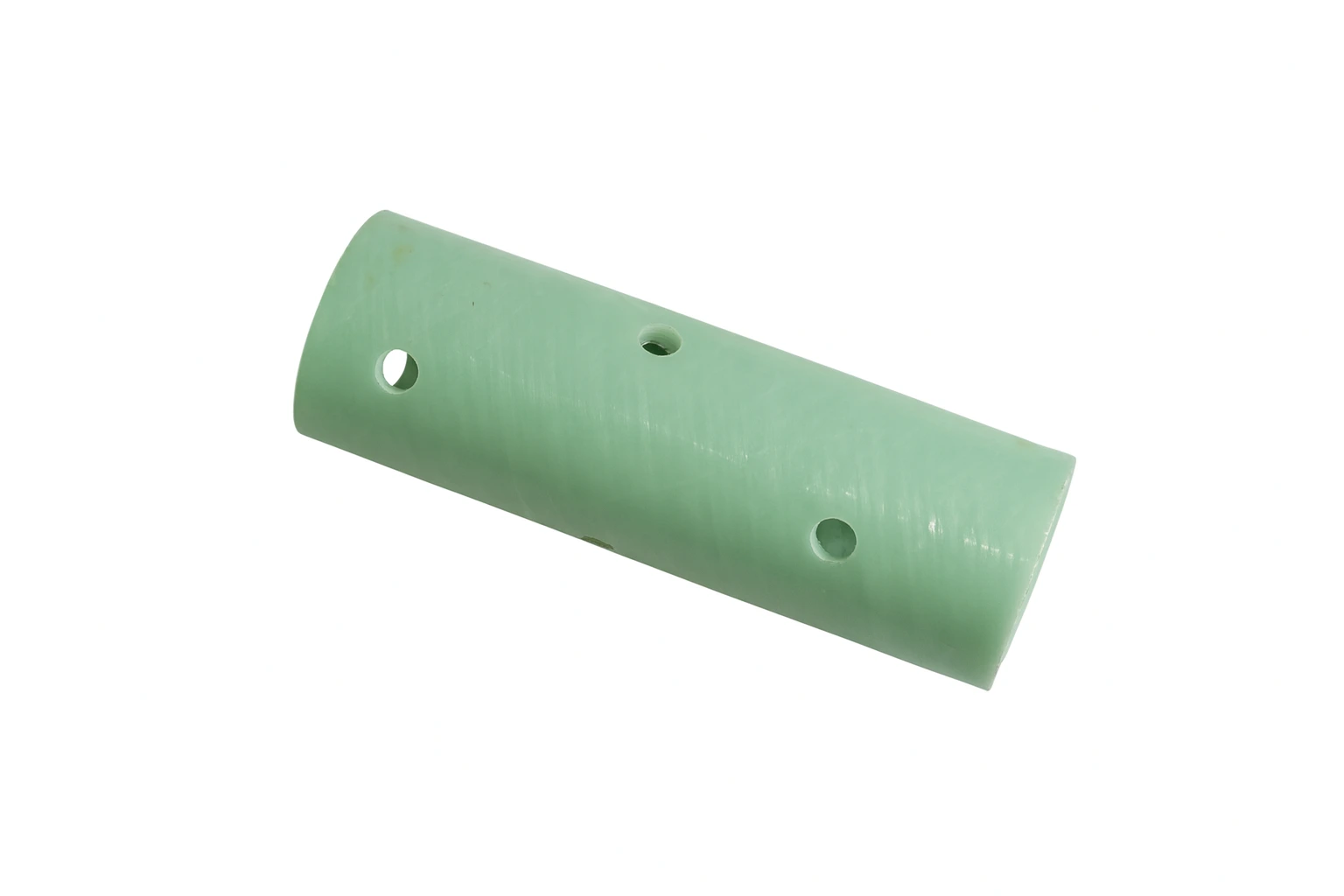
GRE Screen Pipes | Composite Sand-Control Screens for CBM & Sour Wells – CNPS
Composite Sand-Control Screens That Outlast Metal Downhole
40% improved collapse resistance over API 5CT steel, 35% lighter, and an inert GRE matrix that shrugs off H₂S, CO₂ and produced water — laser-slot precision to 0.15 mm.
Product Overview
GRE screens are composite filter tubes — glass-reinforced epoxy, precision-slotted by laser — engineered for sand control in the wells where metal screens fail early. The inert GRE matrix resists hydrogen sulfide, carbon dioxide and produced water; removing metal also removes galvanic corrosion and reduces operating weight by about one-third.
Compared with API 5CT steel, the product delivers 40% improved collapse resistance (described in source materials as 40% more durable than metal screen pipe), 35% weight reduction that simplifies rig operation and cuts fuel consumption, and notch (slot) accuracy of 0.15–0.5 mm that effectively controls sand intrusion.
Screens are compatible with high-quality screen joints and elastomeric seals and can be used with familiar existing API connections — so field adoption does not require a new connection learning curve.
Why Choose GRE Pipes?
- Metal screens pit and crack in sour gas, CO₂ and produced water
- Screen failure in CBM wells means coal-fines invasion and lost gas production
- Heavy steel screens complicate rig logistics on mountain CBM fields and offshore platforms
- Sand control during frac packing and cleanup demands collapse resistance metal screens struggle to hold
CNPS Solution: Laser-slotted GRE composite screens with an inert epoxy matrix — 40% improved collapse resistance over API 5CT steel, 35% lighter, and customizable slot geometry, resin and reinforcement per well.
- 40% improvement in pressure collapse and cracking ratings protects screens during CBM cleanup and fracturing
- Laser slots of 0.15–0.50 mm filter coal fines while maximizing methane flow
- 35% lighter than steel improves logistics in mountain CBM fields and on offshore platforms
- Service life in acidic gas wells usually 2–3× longer than stainless steel — no pitting or sulfide stress cracking
- High-temperature resin rated 200 °C, steam-circulation tested for SAGD
- Customized per well: aperture, temperature curve, collapse range, resin formula and reinforcement plan
- Slot width: 0.15–0.50 mm laser-cut; standard increment 0.05 mm; custom sizes on request
- Size scope (reference): DN100 – DN250; 10 – 25 MPa
- Design basis (reference): SY/T 6267-2006 Glass Fiber Pipeline Specification
- Construction: glass-reinforced epoxy composite, bored and slotted by winding process
- Accessories: expansion packers, tracer carriers or flow-control devices can be pre-assembled
- Corrosion resistance — Inert GRE matrix resists attack by carbon dioxide, hydrogen sulfide and chlorides — ideal for sour coal seams.
- High pressure resistance — 40% improvement in pressure collapse and cracking ratings protects the screen during CBM cleanup and fracturing.
- Precise slots — Laser slots of 0.15–0.50 mm filter coal fines while maximizing methane flow.
- Lightweight — 35% lighter than steel, improving logistics in mountain CBM fields and on offshore drilling platforms.
- High-temperature capability — High-temperature resin system rated 200 °C, passed the steam circulation test with no reduction in compressive strength (SAGD application).
- Longer service life — In acidic gas wells, service life is usually 2–3 times longer than stainless steel; eliminates pitting corrosion and sulfide stress cracking.
- Per-well customization — Aperture size, temperature curve and collapse range from the customer; slot width, resin formula and reinforcement plan customized; can pre-assemble expansion packers, tracer carriers or flow-control devices.
Technical Specifications
| Item | Specification |
| Diameter / Size Range | DN100 - DN250; 10 - 25 MPa |
| Design Standard | SY/T 6267-2006 Glass Fiber Pipeline Specification |
⚙️Applications
- Coalbed methane (CBM) wells — sour coal seams
- Sour gas wells and deepwater projects where metal screens fail prematurely
- High-temperature steam-assisted gravity drainage (SAGD) wells
- Water source wells and horizontal CBM wells
- Sand control: withstands frac-packing loads and thermal cycling
🔧Installation / Connection
- Compatible with high-quality screen joints and elastomeric seals; usable with familiar existing API connections
- 35% lighter strings reduce rig load and fuel consumption during deployment
- Pre-assembled accessories (expansion packers, tracer carriers, flow-control devices) shorten run-in time
- Easily drillable construction per reference data — no safety hazard on contingency operations
🎨Project-Based Customization
- Aperture size, temperature curve and collapse range supplied by customer
- Slot width, resin formula and reinforcement plan customized
- Pre-assembly of expansion packers, tracer carriers or flow-control devices
- Sizes and pressure scope per well program — reference scope DN100–DN250, 10–25 MPa
💎Why CNPS
- Solution engineering — screens specified around your well's sand, temperature, collapse and completion program
- Downhole expertise — customization of slots, resin and reinforcement per well conditions
- System compatibility — joints, seals and API connections integrated for field adoption
- Performance transparency — documented collapse, weight and temperature data with sources
Frequently Asked Questions
Get in touch with us
just leave your email or phone number in the contact form so we can send you a free quote for our wide range of designs