



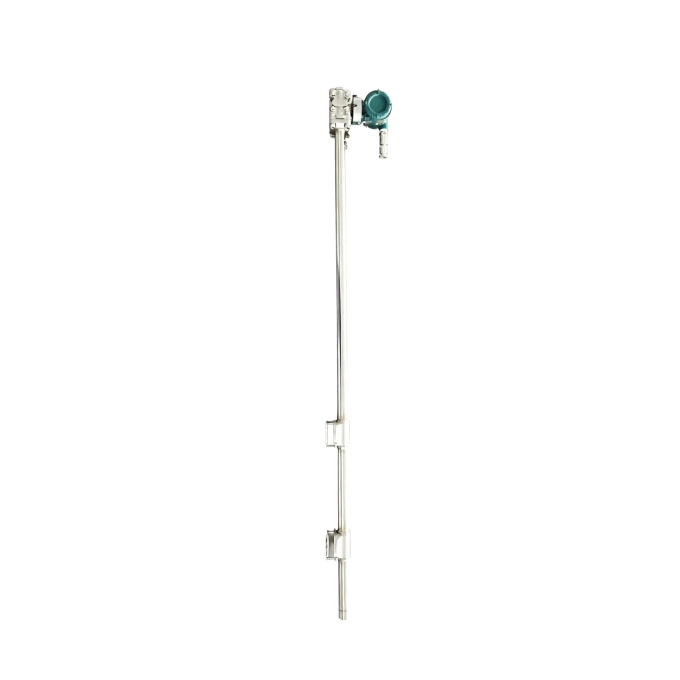
Mud Density Sensor | Differential Pressure, 0.96-3.0 g/cm³ | CNPS
Continuous Mud Weight Monitoring for Safer Drilling
Differential-pressure density measurement with ±0.5% FS accuracy, IP67 stainless steel construction, and 4-20 mA, HART, or wireless outputs.
Product Overview
The CNPS mud density sensor provides continuous and highly accurate measurements of drilling fluid density. It is specifically designed for logging instruments and drilling rig systems, ensuring drilling stability and reducing risks.
The sensor uses a differential pressure design that captures precise readings within fixed depth intervals and converts the differential pressure into mud weight data. It automatically measures drilling fluid density in real time, eliminating the delay caused by manual sampling, and is built to withstand extreme oilfield environments, reducing downtime and drilling risks.
What Does This Sensor Measure?
The sensor measures drilling fluid density continuously using a differential pressure design: it captures precise pressure readings within fixed depth intervals of the fluid column and converts the differential pressure into mud weight data. The measurement runs automatically and in real time, eliminating the delay caused by manual sampling, and supports water-based, oil-based, and cement slurries.
Key Features & Benefits
- Density range 0.96 - 3.0 g/cm³, configurable by application — Covers water-based, oil-based, and cement slurries with application-specific configuration.
- Accuracy as high as ±0.5% FS — Trustworthy mud weight data for drilling decisions.
- Stainless steel casing with IP67 protection — Operates reliably in high-pressure, high-temperature, and corrosive drilling environments.
- Outputs: 4-20 mA, HART, or wireless signal transmission — Flexible integration options for any mud logging setup, wired or wireless.
- Compact, easy-to-install design — Quick installation on the mud logging instrument without major modifications.
- Low maintenance cost — Sturdy structure minimizes the frequency of cleaning and calibration.
- Digital interface with clear output — Simplifies interpretation of on-site data for rig personnel.
- Explosion-proof rated design (IP67, as documented) — Suitable for hazardous drilling areas according to the source documentation.
Technical Specifications
| Item | Specification |
| Measurement Range | 0.96 - 3.0 g/cm³ |
| Accuracy | ±0.5% FS |
| Measurement Principle | Differential pressure design; converts differential pressure into mud weight data |
| Output Signal | 4-20 mA, HART, or wireless signal transmission; wired and wireless configuration options |
| Protection Rating | IP67 |
| Material / Construction | Stainless steel casing |
🔧How It Works
Summary: The mud density sensor uses a differential pressure design: it captures precise pressure readings within fixed depth intervals of the drilling fluid column and converts the differential pressure into mud weight (density) data in real time.
Steps
- The compact sensor is installed on the mud logging instrument or drilling rig system without major modifications.
- Differential pressure is captured within fixed depth intervals of the fluid column.
- On-board conversion translates the differential pressure into mud weight data.
- Readings are transmitted continuously via 4-20 mA, HART, or wireless output.
- Operators receive automatic, real-time density data, eliminating manual sampling delay.
⚙️Applications
- Mud logging instruments and drilling rig systems — Continuous monitoring of drilling fluid for logging and rig operations.
- Water-based, oil-based, and cement slurries — Density range applicable across the full spectrum of drilling and cementing fluids.
- High-pressure, high-temperature, corrosive drilling environments — Stainless steel housing and IP67 protection support reliable operation in extreme conditions.
- Real-time drilling fluid monitoring — Continuous density data reduces downtime and drilling risks compared with manual sampling.
💎System Integration
The sensor is compatible with standard mud logging systems and offers multiple output options including 4-20 mA, HART, and wireless signals, with both wired and wireless configuration options available. Its compact design enables quick installation on existing mud logging instruments without major modifications, and its digital interface simplifies on-site data interpretation.
🎨Why CNPS
- Purpose-built for mud logging — Designed specifically for mud logging instruments and drilling rig systems for continuous monitoring of drilling fluid.
- Extreme-environment reliability — Withstands extreme oilfield environments, reducing downtime and drilling risks.
- Low total cost of ownership — Sturdy structure minimizes cleaning and calibration frequency, lowering maintenance costs.
- Flexible integration — 4-20 mA, HART, and wireless output options with wired or wireless configurations fit any logging setup.
Frequently Asked Questions
Get in touch with us
just leave your email or phone number in the contact form so we can send you a free quote for our wide range of designs